
PSE Certified | DALI-2 & DT8 Dimmable | JIS Standard Compliant Luminaires Engineered for Export
The Tokyo retail market represents one of the most sophisticated, high-density, and quality-conscious commercial environments globally. From the multi-level luxury flagships lining Ginza Chuo-dori and Omotesando to subterranean dining halls (Depachika) under Tokyo Station and the fast-paced retail hubs of Shibuya and Shinjuku, commercial illumination is not merely functional—it is an essential instrument of spatial storytelling, visual merchandising, and brand equity.
As a specialized Retail Lighting Exporter to the Tokyo market, navigating the technical and legal requirements of Japan’s commercial sector demands precision engineering. Tokyo commercial properties are constrained by strict ceiling heights, precise thermal distribution needs due to compact ceiling plenums, and non-negotiable compliance under the Electrical Appliance and Material Safety Law (DENAN Law / PSE Mark) and JIS C 8105 series standards. Overseas exporters must offer specification-grade luminaires capable of operating on Eastern Japan's 100V / 50Hz AC power network while achieving zero flicker, low glare (UGR < 19), and energy efficiency that supports Tokyo’s stringent Zero Emission Building (ZEB) policies.
To successfully deploy architectural and retail fixtures within Tokyo’s commercial sector, export manufacturers must engineer solutions that meet four foundational pillars:
Every commercial precinct in Tokyo presents unique architectural profiles, shopper demographics, and spatial limitations. Exported retail lighting solutions must be adapted to these hyper-local environments.
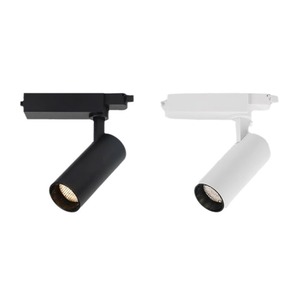
High-end fashion boutiques demand ultra-clean ceiling planes with completely hidden light sources. Multi-circuit 4-wire COB track spotlights with narrow beam angles (15°–24°) and DALI-DT8 color tuning allow visual merchandisers to dynamically alter color temperatures (2700K to 4000K) according to seasonal collections.
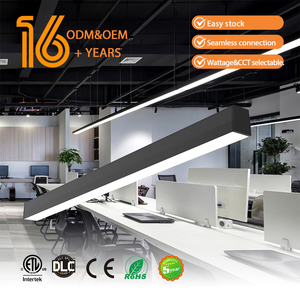
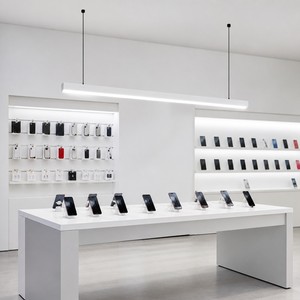
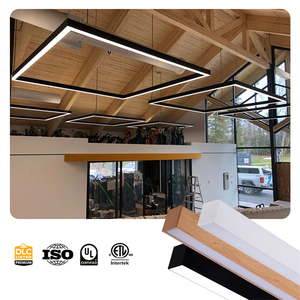
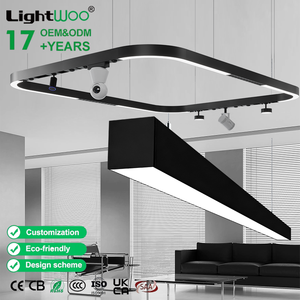
Multi-story digital retail environments utilize continuous linear pendant arrays with microscopic joint gaps (<0.2mm). Integrated optics provide downward task light combined with gentle ceiling washes, eliminating visual clutter in spaces with low floor-to-ceiling heights.
Subterranean retail spaces underneath major transit hubs require IP44 damp-rated linear fixtures that render fresh produce, bakery, and confectionery with exceptional natural vibrancy without generating heat that compromises refrigerated displays.
| Tokyo District / Retail Format | Dominant Luminaire Type | Target CCT & CRI | Control Protocol | Regulatory Focus |
|---|---|---|---|---|
| Ginza Luxury Flagships | Recessed COB Spotlights & Micro Track | 2700K–3500K (CRI > 98, R9 > 90) | DALI-2 / DALI-DT8 Tunable White | JIS C 8105-2-2 / High PSE Safety |
| Shibuya Electronics & Apparel | Seamless Linkable Linear Pendants | 4000K–6000K (CRI > 90) | 0-10V / PWM / Smart Mesh | Low THD (<10%) / 100V Grid Protection |
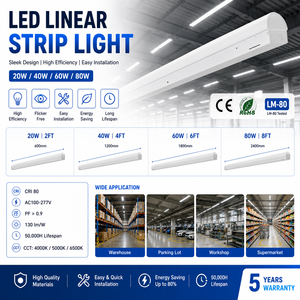
| Underground Depachika (Gourmet) | IP44 Surface/Recessed Linear Strips | 3000K Warm White (High R9 Red Render) | Phase-Cut / DALI Dimmable | Damp Location / IP44 Moisture Resistance |
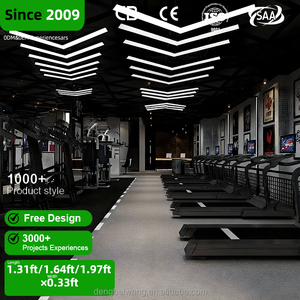
| Commercial Gyms & Lifestyle Hubs | Wide Beam High-Lumen Linear Profiling | 4000K–5000K (130 lm/W Efficiency) | DALI-2 Sensor Interfaced | Tokyo ZEB Carbon Reduction Compliance |
Tokyo’s retail sector is rapidly abandoning legacy phase-cut dimming in favor of digital protocol standardization. DALI-DT8 (Digital Addressable Lighting Interface - Device Type 8) has become the benchmark standard for high-end retail projects in Tokyo. DT8 allows precise color temperature tuning across a single addressable loop, enabling retail spaces to automatically shift ambiance from bright, refreshing daylight (5000K) during morning shopping peak hours to intimate warm tones (2700K) for evening events.
Due to high real estate costs in Tokyo, commercial ceiling heights are often restricted to 2.4 to 2.8 meters in renovated older structures. Heavy, bulky luminaires create visual clutter and oppress the shopping experience. Japanese lighting specifiers overwhelmingly prefer low-profile linear fixtures, slim recessed channels, and track systems with integrated driver boxes. Continuous linear systems featuring interlocking connection mechanisms with gap tolerances under 0.2mm ensure long, uninterrupted ribbons of light without light leakage or shadows at joint junctions.
Modern Japanese retail design principles prioritize customer psychological comfort. Direct LED glare induces eye fatigue and reduces dwell time. Consequently, exported luminaires specified for Tokyo must incorporate specialized optical micro-prismatic diffusers, deep-set COB reflectors, or dark-light louver accessories to guarantee Unified Glare Ratings below 19 (UGR < 19) across main walking corridors and cash-wrap areas.
Rooted in a legacy of precision craftsmanship and specification-grade manufacturing, our production ecosystem combines hand-finished craftsmanship with rigorous, automated industrial standards. Every fixture engineered for the Tokyo market undergoes exhaustive thermal, electrical, and optical testing to ensure flawless performance upon arrival.
Metal cutting, welding, spinning, surface finishing, and electrical wiring are executed under one roof, providing total traceable quality control for overseas orders.
Our engineering division delivers dimensioned shop drawings, photometric IES/LDT files, and technical submittal packages within days of project briefing.
From hand-applied antiqued patinas to satin brushed metals, natural wood accents, and custom linen diffusers, we match exact interior design specifications.
All export products arrive complete with detailed installation instructions, seismic anchoring points, and confirmed dimming protocol compatibility.
Addressing key technical, logistical, and legal questions regarding the export and deployment of commercial lighting fixtures to Japan.
Yes. All luminaires designated for export to Japan are engineered to satisfy the mandatory Electrical Appliance and Material Safety Law (DENAN Law). We utilize PSE-certified class 2 drivers, flame-retardant wiring, and compliant terminal blocks. We provide full technical documentation and test reports required by Japanese importers for smooth customs clearance and METI filing.
Tokyo operates on a 100V single-phase grid at a 50Hz frequency (unlike Western Japan's 60Hz). Our fixtures are built with wide-range universal drivers (100V–247V AC) optimized specifically for 50Hz operation. They incorporate active Power Factor Correction (PFC > 0.95) to prevent harmonic interference on commercial supply lines.
Absolutely. Every standard profile in our catalog can be re-scaled in drop length, profile depth, and mounting configuration. For Tokyo's seismic standards, we offer integrated safety wire anchor points, vibration-resistant latching clips for track fixtures, and ultra-slim flush-mounting kits.
For high-end retail, apparel, and food displays in Tokyo, we offer museum-grade LED engines featuring CRI (Ra) > 95, R9 (red spectrum) > 80, and color consistency held tightly within a 2-step or 3-step MacAdam Ellipse to eliminate color variation between adjacent fixtures.
Once CAD shop drawings are approved, standard production lead time is typically 3 to 4 weeks. Express air freight to Narita (NRT) or Haneda (HND) airports takes 3–5 days, while ocean freight to Tokyo Port generally requires 10–14 days transit time.
Connect with our engineering team to review CAD drawings, request PSE certification submittals, or obtain custom pricing for export to Tokyo.
Get a Quote