Engineered for hotels, corporate office hubs, luxury retail galleries, and public infrastructure projects across Tashkent, Samarkand, and Bukhara.
Analyzing the macroeconomic growth drivers, regional urban development projects, and specification standards shaping lighting procurement in Central Asia.
Uzbekistan has emerged as the economic growth powerhouse of Central Asia. Following comprehensive economic reforms, currency liberalization, and tax incentives for foreign investment, cities like Tashkent, Samarkand, Bukhara, and Namangan are undergoing unprecedented urban transformation. The mega-scale Tashkent City International Business Center (IBC), alongside dozens of regional hospitality, banking, and mixed-use commercial master plans, has generated massive demand for specification-grade architectural luminaires.
To meet modern energy-efficiency directives issued by the Ministry of Energy of the Republic of Uzbekistan, traditional halogen and low-efficiency fluorescent fixtures are being systematically replaced by high-efficacy LED lighting networks. B2B buyers, general contractors, and MEP consultants require reliable manufacturing partners from China capable of delivering high-volume orders compliant with international quality benchmarks, fast logistics turnarounds, and competitive price-to-performance ratios.
Driven by national initiatives to expand tourism in Samarkand and Bukhara, international hotel franchises (including Marriott, Hilton, and Radisson) are constructing luxury accommodations requiring custom chandeliers, ambient guestroom illumination, and outdoor facade accent lighting.
Tashkent's business district is expanding rapidly with high-rise office towers, modern co-working hubs, and banking centers. High-luminous efficiency downlights, low-glare UGR<19 panel networks, and intelligent DALI-2 track lighting are required for corporate fit-outs.
Uzbekistan’s modern energy codes prioritize power factor efficiency (>0.95), reduced total harmonic distortion (THD <15%), and smart dimming capabilities (Zigbee 3.0 / 0-10V) to optimize municipal grid stability and lower operational expenditure.
Commercial lighting exported to Uzbekistan must withstand specific electrical grid conditions, wide temperature variations, and strict regional certifications.
| Engineering Parameter | Standard Export Requirement | Our Advanced China Factory Benchmark | Uzbekistan Site Advantage |
|---|---|---|---|
| Operating Input Voltage | 220V - 240V AC, 50Hz | Wide-Range Driver: 85V - 265V AC | Prevents LED driver burnout during seasonal grid voltage fluctuations in suburban Tashkent & Fergana. |
| Thermal Management | Passive aluminum heat sink | ADC12 Die-Cast Aluminum + Copper Heatpipes | Ensures stable junction temperature during hot summers (+45°C ambient temperature). |
| Color Rendering Index (CRI) | Ra > 80 | High Fidelity Ra > 90 / 95 (R9 > 50) | Renders natural textures in high-end retail, museums, and luxury hotel interiors. |
| Smart Control Protocols | Basic On/Off Switch | Zigbee 3.0, DALI-2, 0-10V, Triac Dimmable | Seamless integration into modern BMS (Building Management Systems) and smart office automation. |
| Regulatory Compliance | Basic CE Mark | EAC (Eurasian Conformity), SAA, CE, RoHS | Expedites customs clearance at Khorgos dry port and Uzbek border checkposts. |
Tailoring luminaire form factors, color temperatures, and optical beam angles to the specific functional demands of Uzbek commercial projects.
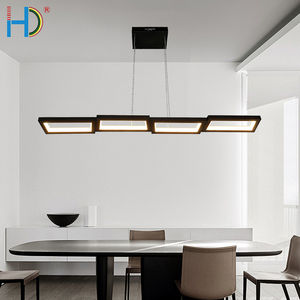
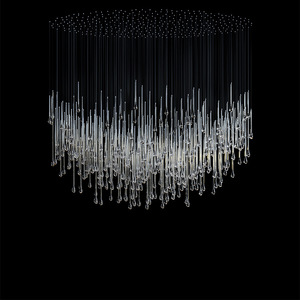
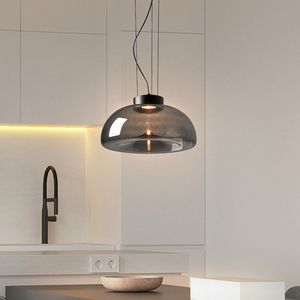
Central Asian hospitality design demands grand visual statements combined with warm, inviting ambient light. Custom long LED pendant lights with adjustable suspension lengths and bespoke decorative chandeliers act as central focal points in double-height hotel lobbies. Paired with warm white 3000K dimmable spotlights, these installations deliver a luxurious atmosphere while maintaining low wattage consumption.
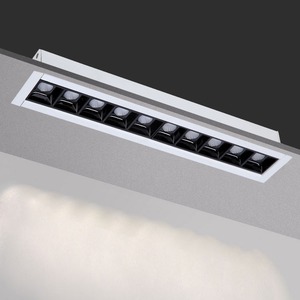
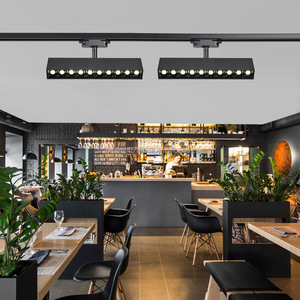
Modern offices require visually comfortable lighting that boosts employee productivity. Recessed anti-glare high bay downlights and 230V Zigbee-controlled track systems allow facility managers to dynamically adjust lighting scenes depending on daylight availability. Micro-prismatic optical diffusers ensure UGR values remain under 19, preventing eye strain during long working hours.
High-end apparel and jewelry stores rely heavily on accent lighting to accentuate merchandise color vibrancy. DALI-dimmable 12W 4-wire LED track lights with high color fidelity (CRI Ra>95) offer precise beam aiming (15°, 24°, 36° interchangeable lenses), allowing store managers to highlight promotional displays effortlessly while keeping background heat radiation minimal.
As Uzbekistan reinforces its role as a Central Asian logistics corridor, heavy-duty industrial high bays with IP65 dust-and-waterproofing and IK08 impact resistance are essential for logistics parks near Navoi and Tashkent Airport. High-efficacy LEDs (140-160 lm/W) drastically lower utility bills for 24/7 operating facilities.
Combining end-to-end manufacturing flexibility, rigid quality control, and optimized cross-border Silk Road supply chain logistics.
Our engineering team converts client elevations and architectural CAD files into detailed 3D shop drawings and photometrical DIALux simulations within 48 hours, ensuring exact dimensional and beam accuracy before mass production.
Every batch undergoes strict quality gates: 100% high-voltage insulation breakdown testing, 48-hour continuous thermal aging in ambient test chambers, optical integrating sphere spectral analysis, and vibration testing for transit safety.
Leveraging direct land transport corridors from Xinjiang Khorgos and Altynkol dry ports, we offer consolidated container freight and direct truck transport straight to Tashkent Customs clearance zones (Sergeli / Chukursay) with typical transit times of 10 to 15 days.
Clear answers regarding shipping, custom engineering, local code compliance, warranty terms, and payment methods.
Partner with China's leading specification-grade commercial lighting manufacturer. Get instant pricing, DIALux photometric calculations, and custom engineering support tailored for Central Asian developments.