Precision-engineered architectural track luminaires available for custom contract manufacturing, private labeling, and regional distribution.
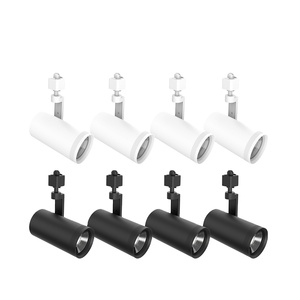
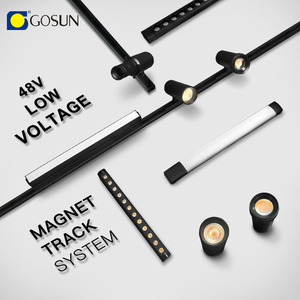
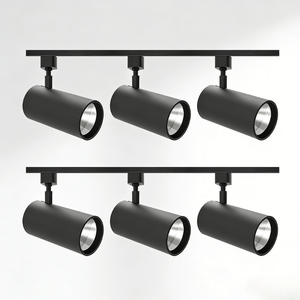
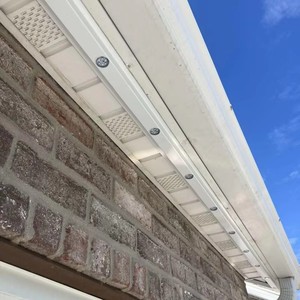
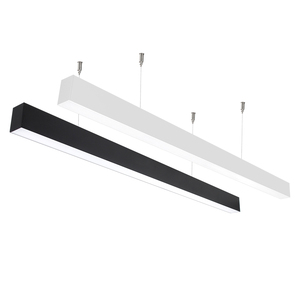
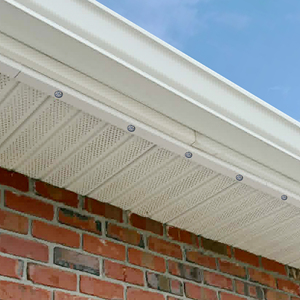
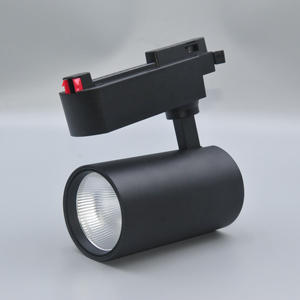
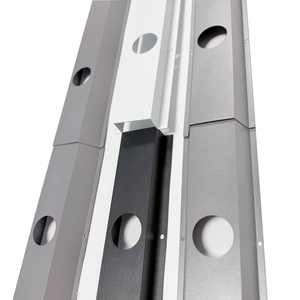
As commercial architecture, high-end retail environments, and luxury hospitality spaces evolve toward minimalist aesthetics and adaptive illumination, the demand for high-performance, custom engineered track lighting systems has escalated globally. Selecting a qualified Custom OEM Track Lighting Factory & Supplier is no longer merely a purchasing decision—it is a critical engineering partnership that impacts photometric accuracy, structural compliance, energy efficiency, and total project lifecycle performance.
The foundation of specification-grade track lighting lies in thermal management and mechanical structural integrity. Superior OEM manufacturers utilize high-grade 6063-T5 extruded aluminum alloy for track rails and fixture housings. Compared to standard die-cast aluminum or recycled alloys, 6063-T5 offers superior thermal conductivity (201 W/m·K), ensuring that heat generated by high-power LED arrays (COB and SMD) is efficiently dissipated away from the junction layer.
Effective passive heat dissipation preserves junction temperatures below 85°C, preventing chromaticity shift and guaranteeing operational longevity that exceeds L80B10 standards (>50,000 hours). Furthermore, precise extrusion tolerances ensure flawless mechanical fitment for magnetic track recessed channels, surface-mounted rails, and suspended cable configurations.
CNC tooling and 6063-T5 aluminum extrusions provide mechanical tolerances within ±0.1mm for seamless rail alignment.
Custom beam shaping from 10° narrow spot to 60° flood utilizing Japanese Total Internal Reflection (TIR) optical lenses.
Fully compliant with UL 1574, ETL, CE, FCC, RoHS, and Title 24 High Efficacy requirements for global deployment.
Modern commercial lighting design prioritizes visual comfort and spectral fidelity over raw lumen efficiency. High-end retail showrooms, art galleries, and corporate lobbies require light sources that faithfully represent colors without causing visual fatigue.
Our OEM manufacturing capabilities encompass advanced spectral engineering, incorporating Bridgelux, CREE, and Osram LED engines capable of achieving Color Rendering Index (CRI) ratings of Ra > 97, with R9 values exceeding 90. Furthermore, we implement TM-30-18 metrics (Rf > 95, Rg ≈ 100) to evaluate color fidelity and saturation accurately. To prevent glare in low-plenum or task-oriented environments, our optical assemblies integrate deep-recessed baffles, micro-prismatic diffusers, and specialized reflectors, yielding Unified Glare Ratings (UGR) of less than 13.
The architectural lighting industry is experiencing a massive shift from traditional 120V/230V line-voltage 3-circuit track systems toward ultra-low voltage DC48V Magnetic Track Systems. OEM buyers must evaluate these technologies based on project scope, electrical safety, and modular flexibility:
| Evaluation Parameter | DC48V Low-Voltage Magnetic Track | AC 120V/230V 3-Circuit Track |
|---|---|---|
| Electrical Safety | SELV (Safety Extra Low Voltage) Touch-Safe | High Voltage Mains - Requires Enclosed Channels |
| Module Flexibility | Tool-free hot-swappable click-and-play magnetic locking | Mechanical mechanical latching with fixed mechanical adapters |
| Aesthetic Profile | Ultra-slim architectural depth (as low as 5mm trimless) | Bulkier rail extrusion profiles |
| Smart Control Integration | Integrated Tuya, Zigbee, DALI-2, Casambi addressability | Phase dimming, 0-10V or external wiring control |
| Target Applications | Luxury Residential, Showrooms, Corporate Offices, Boutiques | High-Ceiling Supermarkets, Warehouses, Large Retail |
As smart building automation becomes a baseline requirement for commercial developments, OEM track lights must integrate seamlessly with wireless and wired control ecosystems. Our direct factory solution supports modular driver integration, offering interoperability with:
For B2B procurement managers, lighting specifiers, and brand distributors, understanding market trajectories is vital to maintaining competitive advantage and avoiding product obsolescence. Below are key macro trends reshaping the OEM track lighting landscape:
Architects and lighting designers are increasingly specifying dynamic circadian lighting systems that emulate natural sunlight throughout the day. OEM factories are responding by integrating dual-channel CCT drivers paired with violet-chip full spectrum LED technology. These systems eliminate harmful blue-light peaks, enhancing visual comfort and well-being in corporate workplaces and residential spaces.
Track lighting is no longer restricted to interior environments. The market is witnessing rapid adoption of weatherized IP67 and IP68 outdoor aluminum track systems. Engineered to withstand extreme temperature variations (-40°C to +50°C), UV radiation, and heavy moisture ingress, these systems utilize silicone potting and corrosion-resistant anodized tracks to bring adjustable directional spot and linear point lighting to building facades, soffits, and outdoor hospitality venues.
Environmental, Social, and Governance (ESG) mandates are driving specifiers to seek sustainable lighting fixtures with repairable components. Custom OEM factories are adopting modular structural design philosophies—where LED modules, optical lenses, and electronic drivers can be serviced or upgraded independently without replacing the entire track luminaire, reducing e-waste and extending product lifecycle value.
Building a resilient lighting brand or fulfilling complex commercial submittals requires a manufacturing partner with deep technical capability, rigorous quality control, and flexible contract engineering.
Rapid 3D CAD modeling, optical simulation, and rapid sample prototyping within 7–10 working days.
Every fixture undergoes 4-hour high-temperature burn-in testing, integrating sphere color consistency checks, and dielectric withstand testing.
Comprehensive submittal support including IES/LDT photometric files, shop drawings, thermal reports, and international logistics management.
Detailed engineering and procurement insights for commercial buyers, lighting distributors, and OEM partners.
Our standard Minimum Order Quantity (MOQ) for custom OEM orders starts at 100 units per model for standard aluminum finishes (Black/White). For bespoke color matching (RAL powder coating), custom optical beam development, or specialized housing extrusions, MOQs generally range from 300 to 500 units depending on the complexity of the custom tooling required.
Yes, absolutely. As a dedicated OEM/ODM factory, every track luminaire can be re-engineered to match your project specifications. We can adjust physical housing lengths, integrate specialized drivers (Tridonic, MEAN WELL, HEP, Philips), modify optical beam angles (from 10° spot to asymmetric wall-washing), and tailor CCT tuning protocols (DALI-2, Casambi, 0-10V, Tuya).
Our manufacturing facility operates under ISO9001 quality management systems. Product lines carry comprehensive global certifications including UL 1574, ETL, FCC, and Title 24 compliance for the North American market, as well as CE, RoHS, CB, and ENEC for European and international commercial standards. Fully certified test reports are provided for submittal packages.
Color consistency is guaranteed through strict LED binning protocols. We specify 2-step or 3-step MacAdam Ellipse (SDCM ≤ 3) for all premium COB and SMD LED chips. This ensures that luminaires produced across different batch runs exhibit identical chromaticity and color temperature without visible deviation.
We provide complete specification submittal packages for all OEM fixtures. This includes standard IES (.ies) and EULUMDAT (.ldt) photometric files tested via our in-house goniophotometer lab, 3D CAD step files, thermal dissipation reports, installation manuals, and wiring schematics.
Engineered OEM sample prototypes are typically produced within 7 to 10 working days following drawing approval. Mass production lead times generally range between 20 and 25 calendar days, depending on raw material sourcing and total order volume.