Precision-crafted commercial luminaires designed for flexible spatial integration and high photometric performance.
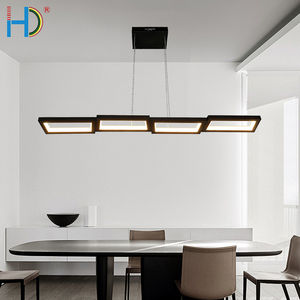
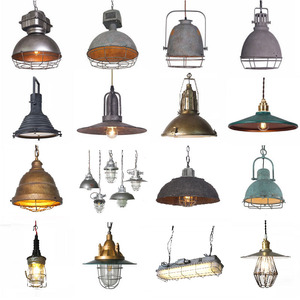
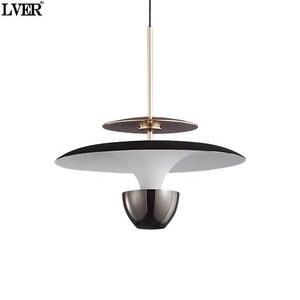
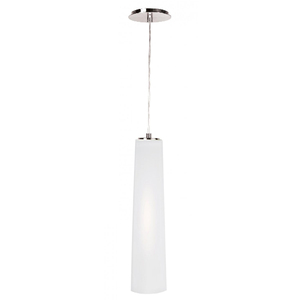
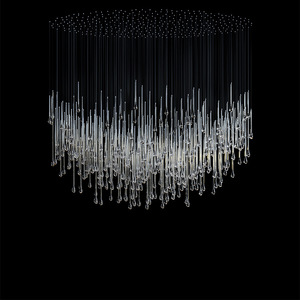
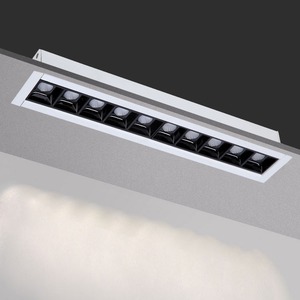
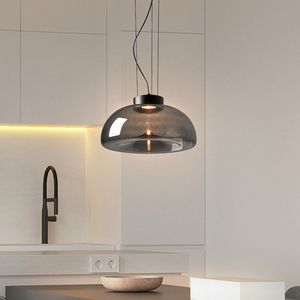
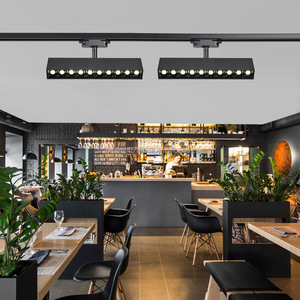
In the modern international built environment, lighting specification is no longer merely an aesthetic decision—it is a rigorous technical discipline requiring photometric precision, thermal stability, seamless structural modularity, and strict code compliance. As a leading China modular lighting supplier, our manufacturing ecosystem bridges high-end US and European architectural design language with China's unmatched engineering scalability and component supply chains.
Every luminaire in our production framework—from ADA-compliant wall sconces and oversized multi-tier lobby chandeliers to magnetic low-voltage linear track systems—is built under a single integrated manufacturing protocol. Unlike assembly-only suppliers, our operations maintain complete internal control over raw metal CNC turning, laser cutting, hand-applied patinas, automated powder coating, shade fabric stitching, and final electrical testing.
Complete traceability from structural extrusion to driver integration eliminates lead-time friction and guarantees submittal compliance.
Our engineering office delivers submittal packages, 3D CAD models, and Photometric IES/LDT files within 48 to 72 hours of RFQ engagement.
Luminaires engineered for global import compliance including SAA, CE, RoHS, UL, and damp-location architectural building requirements.
This single-roof workflow enables lighting designers, hospitality purchasing agents, and MEP engineers to request modifications—such as scaling fixture drop heights from 24 inches to 9 feet, altering mounting canopy profiles, or integrating emergency battery backup drivers—without triggering the cost premiums traditionally associated with custom architectural lighting production.
Modular lighting represents the paradigm shift in contemporary architectural design. By decoupling the lighting engine, optical diffuser, housing body, and driver interface into standardized, interchangeable sub-modules, specifiers gain unprecedented spatial versatility while facility managers secure long-term maintenance simplicity.
Our modular engines utilize COB (Chip-on-Board) and SMD LED arrays selected strictly within a 2-step or 3-step MacAdam Ellipse. This ensures absolute chromaticity consistency across large-volume commercial orders, preventing color shifting between adjacent luminaires in hotel corridors or corporate ceiling grids.
| Performance Metric | Standard Commercial Grade | Specification-Grade Modular Standard | Architectural Impact |
|---|---|---|---|
| Color Rendering Index (CRI) | Ra 80+ | Ra 95+ (R9 > 80, R12 > 85) | Realistic material rendering of timber, fabrics, and natural skin tones. |
| Unified Glare Rating (UGR) | UGR < 22 | UGR < 16 (Deep-recessed micro-optics) | Eliminates visual fatigue in high-end workplaces and luxury dining. |
| Luminous Efficacy | 90 - 105 lm/W | 130 - 160 lm/W (System level) | Reduces building operational power density (LPD) for LEED certification. |
| Dimming Control Protocol | Phase / Triac | DALI-2, Zigbee 3.0, 0-10V, Casambi | Full integration into smart Building Management Systems (BMS). |
LED longevity relies entirely on junction temperature control. Our modular fixtures incorporate high-density 6063-T5 cold-forged aluminum heatsinks designed through Computational Fluid Dynamics (CFD) modeling. Heat dissipation pathways are structurally isolated from driver compartments, extending component lifespans beyond 50,000 operational hours under ambient operating temperatures up to 45°C.
As commercial real estate operators pivot toward dynamic workspace customization and decarbonization goals, the modular lighting sector is undergoing rapid evolution. Procurement professionals sourcing from China suppliers must align with four strategic technology trends:
Fixed color temperature luminaires are being systematically replaced by dual-channel CCT tunable systems (1800K warm dimming to 6500K daylight simulation). Our modular track spotlights and ceiling downlights integrate dual-channel drivers compatible with DALI DT8 protocols, enabling automated circadian rhythm schedules across corporate lobbies, healthcare facilities, and hospitality environments.
Traditional 230V wired track systems are giving way to DC48V safe low-voltage magnetic tracks. These systems allow end-users to snap, slide, and swap pendant modules, adjustable accent spotlights, and wide-beam diffuse linear lights without tools or licensed electrical intervention. This flexibility dramatically reduces retail and gallery interior refit costs.
European and North American sustainability frameworks now demand circular product designs. Instead of replacing entire luminaires upon light source failure, modular fixtures enable field technicians to swap LED boards or driver pucks within minutes via magnetic or bayonet quick-connect adapters, cutting electronic waste by over 70% during the building lifecycle.
By embedding Zigbee 3.0 and Bluetooth Low Energy (BLE) control nodes directly into individual track drivers, modular lighting systems function as indoor positioning networks and occupancy sensing grids. Facilities managers can monitor real-time power consumption, automate space utilization mapping, and execute predictive maintenance via cloud dashboards.
Sourcing modular architectural lighting directly from top China suppliers offers substantial cost efficiency and custom manufacturing capacity. However, maintaining specification integrity across overseas logistics requires a structured procurement protocol:
Prior to PO release, ensure the factory provides independent third-party LM-79 and LM-80 test reports alongside standard spec sheets. Verify that photometric files (.IES or .LDT) match your lighting designer’s Dialux or Relux illuminance calculations.
Surface treatments react differently under 2700K warm hotel lighting versus 4000K commercial light. Request physical finish plates (brushed brass, hand-applied bronze patinas, matte textured powders, natural wood veneers) for design-team approval under calibrated light boxes before mass fabrication.
Enforce strict Factory Acceptance Testing (FAT). Every batch of modular luminaires should undergo a continuous 48-hour burn-in aging test at full load, coupled with high-voltage dielectric withstand testing and IP-rating water ingress testing for damp or exterior location specifications.
Yes. Because all structural components and drivers are assembled in our fully integrated workshop, drop lengths, canopy diameters, stem configurations, and shade material options can be custom-engineered according to your ceiling plans. Whether you require a 9-foot vertical sconce for a historic terminal bar or a 24-inch globe pendant for a high-ceiling residential dining space, our engineering team supplies complete shop drawings prior to fabrication.
Our commercial and hospitality product families are built to specification-grade standards, carrying SAA certification for Australia/New Zealand, CE and RoHS compliance for European markets, and UL/ETL damp-location standards for North American hotel guestrooms, corridors, and lobbies. ADA-compliant wall sconce profiles with projection depths under 4 inches are available for public corridor specifications.
We supply modular drivers pre-configured for global dimming standards, including 230V/120V phase-cut, 0-10V analog, DALI-2 (IEC 62386 compliant), and wireless mesh protocols such as Zigbee 3.0 and Casambi. This guarantees total interoperability with third-party automation systems such as Lutron, Crestron, Helvar, and Schneider BMS.
Standard engineering shop drawings are submitted within 3 to 5 business days upon receiving CAD reflections or elevations. Sample production typically takes 10 to 14 days, while full commercial production runs require 25 to 35 days depending on total unit count and custom finish requirements. Express air freight and consolidated sea freight logistics services are fully managed by our export team.
Modular architectural luminaires isolate the optical engine and driver assembly from the fixed structural mounting chassis. In the event of driver failure or future LED efficacy upgrades, facility personnel can snap out the internal module without destroying ceiling drywall, repainting surface trims, or disrupting business operations.
Submit your architectural elevations, reflective ceiling plans (RCP), or luminaire schedules to connect directly with our engineering and procurement sales team.