Explore our engineering-grade product catalog. Every fixture is hand-assembled, customizable in drop lengths, optics, and finishes, and optimized for global commercial certifications.
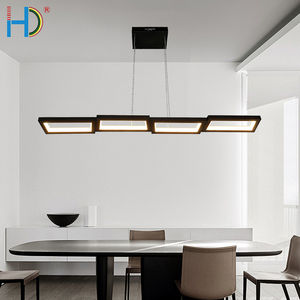
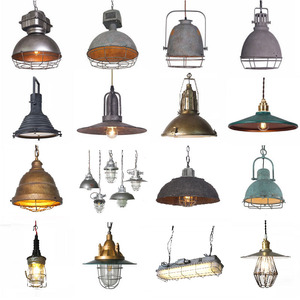
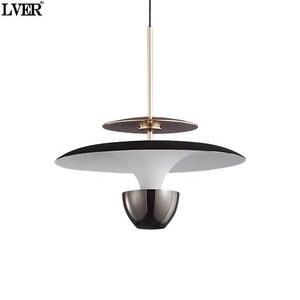
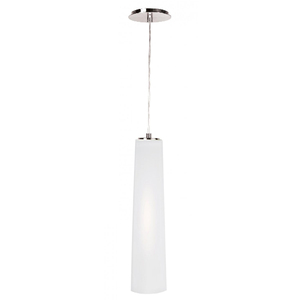
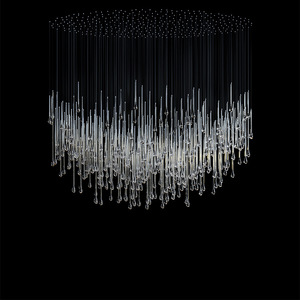
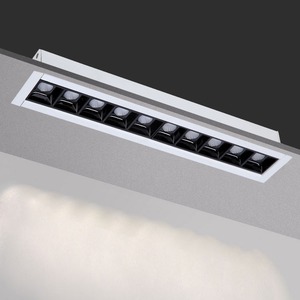
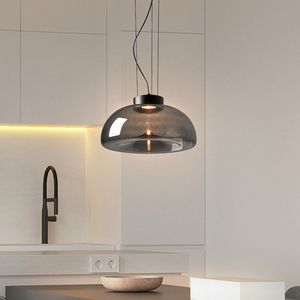
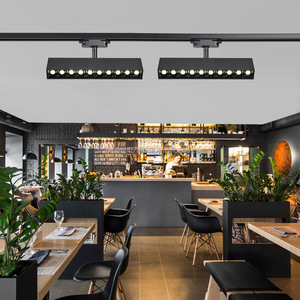
In the evolving landscape of commercial real estate, corporate infrastructure, luxury hospitality, and high-end residential interiors, lighting is no longer treated as a simple operational utility. Modern architectural lighting design sits at the intersection of visual comfort, thermal management, energy economics, and spatial identity. As global procurement managers, engineering consultants, and architectural specifiers seek to navigate the global OEM landscape, establishing partnerships with a tier-one China LED Panels Manufacturer & Supplier has become a strategic priority for achieving high photometric performance at a sustainable total cost of ownership (TCO).
This industry specification guide evaluates the technical benchmarks, structural innovations, smart integration protocols, and quality verification workflows required when specifying custom LED panel fixtures, edge-lit architectural luminaires, and hospitality-grade suspension systems. By synthesizing hands-on fabrication experience with specification-grade engineering, we detail how modern manufacturing solves critical field issues such as optical yellowing, electromagnetic interference (EMI), driver harmonic distortion, and visual fatigue caused by low-frequency flicker.
Specification Note: Specification-grade LED panel manufacturing demands rigorous optical engineering. Edge-lit and direct-backlit panels must guarantee chromaticity consistency across 3-Step MacAdam Ellipses (SDCM ≤ 3) while maintaining unified glare ratings (UGR) under 19 for compliance with EN 12464-1 workplace standards.
To evaluate LED panel quality beyond marketing claims, procurement teams must inspect the raw component assembly. A premium architectural LED panel relies on four fundamental subsystems working in perfect physical balance:
Comparative technical benchmark table for architectural and enterprise procurement evaluation.
| Technical Benchmark | Standard Commodity Panel | Specification-Grade OEM Panel | Impact on Building Performance |
|---|---|---|---|
| Luminous Efficacy | 80 - 100 lm/W | 130 - 160 lm/W | Up to 40% reduction in lighting energy load |
| LGP Material | Recycled PS / Low-grade MS | 100% Virgin Mitsubishi PMMA | Zero optical yellowing; 10+ year physical clarity |
| Color Consistency | 5-Step MacAdam Ellipse (SDCM) | ≤ 3-Step MacAdam Ellipse | Flawless color uniformity across large ceilings |
| Color Rendering Index | Ra 70 - 80 | Ra 90+ (R9 > 50, TM-30-18 verified) | True-to-life architectural finish & skin rendering |
| Driver Ripple & Flicker | > 8% Ripple (High Percent Flicker) | < 1% Low-Ripple Flicker-Free Driver | Eliminates visual fatigue, migraines, and video interference |
| Control Compatibility | Static On/Off or Basic Triac | DALI-2, 0-10V, Zigbee 3.0, Casambi | Seamless integration with smart BMS automation |
Why international lighting designers, hotel groups, and engineering contractors partner with our factory for custom and standard architectural lighting production.
From precision laser cutting, CNC spinning, and heavy-gauge welding to automated metal finishing, all structural work occurs under one roof. This single-roof workflow shortens custom shop-drawing approval to production turnaround from weeks to days.
Every batch undergoes thermal shock testing, integrating sphere spectroradiometer analysis, hi-pot electrical isolation safety checks, and 24-hour continuous burn-in aging prior to final export packaging.
We provide extensive material flexibility, including hand-applied brass patinas, satin anodizing, textured powder coats, real hardwood veneers, and acoustic shade textiles tailored to match precise interior design palettes.
Full support for global intelligence protocols. Drivers are factory-configured for DALI-2 DT8, 0-10V isolated dimming, Zigbee 3.0 mesh networking, and Casambi wireless systems, enabling circadian tunability.
Manufactured to meet stringent international standards. Our fixtures carry CE, SAA, RoHS, and damp-location ratings, alongside ADA-compliant wall profiles for hospitality and public corridors.
From initial design sketches and photometric IES file generation to structural mockups and submittal approval packages, our dedicated engineering team works as an extension of your project firm.
The global market for commercial LED panels is undergoing a structural transition driven by net-zero building directives, WELL Building Standards, and the widespread adoption of IoT smart ceilings. Major procurement buyers, developers, and electrical engineering firms are shifting away from evaluating initial fixture purchase cost toward analyzing Life Cycle Assessment (LCA) and smart control versatility.
Occupant wellness is now central to commercial office and healthcare facility design. Modern procurement specifications increasingly mandate Tunable White LED panels capable of dynamically shifting color temperature from 2700K warm white to 6500K daylight throughout the day. By aligning indoor lighting spectra with natural human circadian rhythms, facility operators report measurable improvements in employee alertness, cognitive performance, and sleep quality patterns.
Direct-backlit and edge-lit panels utilizing Dual-Channel (CCT Tunable) LED engines connected to DALI DT8 drivers allow precise intensity and chromaticity adjustments without sacrificing color rendering integrity (maintaining CRI > 90 across the entire tuning range).
With rising electricity costs and stringent energy codes (such as Europe's Ecodesign Directive and Title 24 in California), baseline efficiency requirements have increased from 100 lm/W to 140–160 lm/W at the fixture level. Achieving these metrics requires:
LED panels are uniquely positioned to serve as the physical network grid for smart buildings. Modern architectural panels are being equipped with integrated miniaturized multi-sensors (occupancy sensing, daylight harvesting, temperature, and indoor air quality monitoring). Using wireless mesh protocols like Zigbee 3.0, Bluetooth Mesh, and Casambi, lighting fixtures collect real-time spatial utilization data, automatically throttling power consumption during unoccupied hours and communicating with central Building Management Systems (BMS).
On the production floor, technological advancements in automated micro-soldering, surface mount technology (SMT), and optical engineering are enabling unprecedented quality control and design flexibility.
Traditional backlit panels required a 30mm to 50mm frame depth to allow optical mixing and prevent diode "hotspotting." Modern Mini-LED arrays utilize thousands of microscopic dies paired with specialized total internal reflection (TIR) lenses. This allows fixture manufacturers to design ultra-slim 10mm direct-lit panels that combine the form factor of edge-lit panels with the superior thermal efficiency and lower optical loss of direct-lit designs.
Advancements in tri-phosphor LED chemistry have yielded full-spectrum LEDs that eliminate the high-energy blue peak characteristic of conventional white LEDs. By producing a smooth spectral power distribution (SPD) that mimics natural sunlight, these fixtures eliminate blue light hazards (RG0 rated), enhance visual acuity, and render colors with TM-30 fidelity scores ($R_f > 95$, $R_g \approx 100$).
Direct answers to essential technical, commercial, and operational questions regarding custom LED panel sourcing from China.
We enforce strict single-binning protocols for all LED chips sourced from our tier-one semiconductor partners. Every production lot is verified using an integrating sphere to ensure chromaticity falls within a ≤ 3-Step MacAdam Ellipse (SDCM ≤ 3). This guarantees that whether you order 50 units or 5,000 units installed across an expansive ceiling grid, there will be no visible color shift or variation between adjacent panels.
Yes. Because every fixture is engineered and hand-assembled in our own fabrication workshop, dimensions, suspension cable drops, surface-mount flange kits, acoustic felt backings, and frame finishes (including anodized metals, wood veneers, and custom RAL powder coats) can be re-engineered to match your project's architectural drawings and ceiling plenum heights.
Light guide plate yellowing is caused by low-grade PS (Polystyrene) or MS materials degrading under LED UV/thermal output. We exclusively specify 100% virgin Mitsubishi optical-grade PMMA (Acrylic) LGPs. PMMA is molecularly stable under thermal stress and ultraviolet exposure, ensuring zero yellowing and maintaining over 90% light transmittance over a 10-year operational span.
Absolutely. We partner with leading driver manufacturers (Helvar, Tridonic, MeanWell, Lifud) to offer full support for DALI-2 (DT6/DT8 Tunable White), 0-10V/1-10V, Triac/ELV, Zigbee 3.0, and Casambi wireless controls. All drivers are flicker-free (ripple < 1%), compliant with IEEE 1789 standards for mitigation of health risks from flicker in indoor lighting.
Our export luminaires carry full compliance documentation depending on the target destination, including CE, SAA, RoHS, CB, and EMC test reports. Photometric IES and LDT files generated by third-party certified laboratories are provided for all optical configurations to facilitate DIALux lighting calculations and submittal packages.
Initial technical shop drawings and CAD submittals are delivered within 48 to 72 hours. Standard OEM panel orders are typically produced and tested within 15 to 20 business days. Custom architectural fabrications involving special patinas, non-standard dimensions, or integrated smart control pre-commissioning generally take 25 to 30 days depending on component scope.
Contact our engineering sales team today to request physical samples, custom shop drawings, photometric IES files, or factory-direct price quotes tailored to your project scale.
Contact Us