Precision-engineered for commercial hospitality, high-rise architectural facades, and institutional developments.
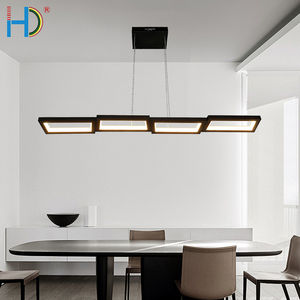
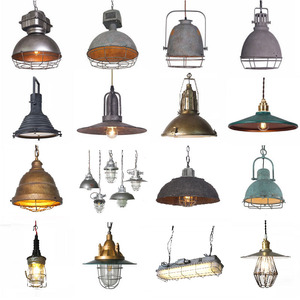
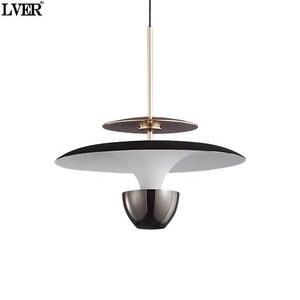
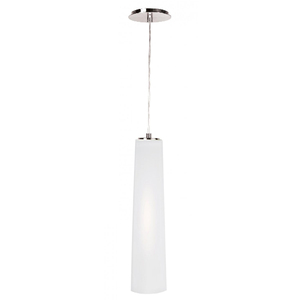
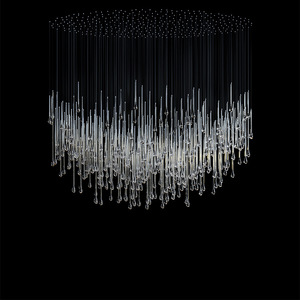
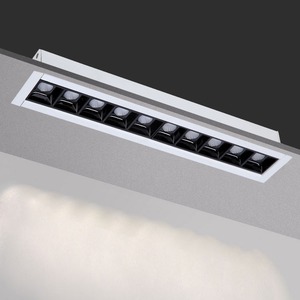
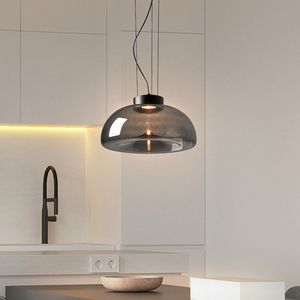
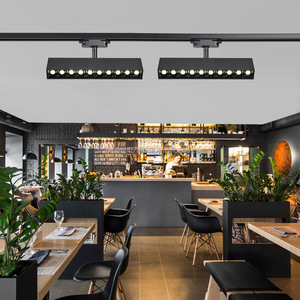
Hand-applied patinas, satin brass, anodized aluminum, and textured PVDF outdoor coatings.
Integrated extrusion, CNC machining, photometric tuning, assembly, and testing under one roof.
Rigorous submersible & high-pressure jet testing for extreme coastal & exterior environments.
Automated aging lines, MeanWell/Tridonic driver pairing, and multi-stage QC protocols.
The global landscape for architectural facade lighting and exterior illumination has undergone a paradigm shift over the past decade. China’s manufacturing ecosystem has transitioned from high-volume, low-cost assembly to specification-grade optoelectronic manufacturing. Today, leading Chinese facade lighting exporters supply landmark skyscrapers, luxury hospitality resorts, municipal infrastructure, and high-end residential developments worldwide. Understanding how to evaluate and partner with top-tier Chinese manufacturers is essential for lighting designers, MEP contractors, real estate developers, and global distributors seeking reliable optical performance, long-term durability, and project compliance.
Modern architectural facades demand lighting solutions that go beyond simple static floodlighting. Contemporary structural designs incorporate dynamic glass curtain walls, complex geometric stone facades, and intricate metallic cladding. Achieving precise optical control—such as narrow 3° wall grazing, uniform wall washing without color banding, and zero light pollution (Dark-Sky compliance)—requires advanced optical design capabilities.
Top China facade lighting factories have invested heavily in internal optical laboratories equipped with goniophotometers, integrating spheres, and thermal imaging chambers. Rather than relying on generic off-the-shelf secondary lenses, premier exporters engineer custom optical PMMA/PC lenses tailored to project-specific beam distributions. Furthermore, these factories maintain full-scale custom fabrication shops capable of modifying fixture dimensions, drop lengths, mounting brackets, and housing profiles to match exact architectural CAD/BIM models.
The lifespan and lumen maintenance (L70/B10 ratings) of exterior LED luminaires depend entirely on thermal dissipation efficiency and physical protection against environmental stressors. Leading Chinese exporters utilize high-thermal-conductivity die-cast aluminum (ADC12) or 6063-T5 extruded aluminum alloys paired with copper-core PCBs. Finite Element Analysis (FEA) software is implemented during the drafting phase to simulate heat convection and prevent driver junction temperatures from exceeding critical thresholds.
Environmental durability is secured through marine-grade C5-M anti-corrosion surface treatments, multi-layer fluorocarbon (PVDF) powder coating, and nitrogen-purged hermetic sealing. For wet and sub-zero locations, fixtures incorporate micro-vent pressure equalization valves (Gore-Tex breathers) to eliminate internal condensation caused by expansion and contraction during day-to-night temperature cycles.
Ultra-tight 3° to 8° optics designed to highlight vertical facade columns up to 50+ meters without light spill.
Integrated 10kV / 20kV surge protection devices (SPD) safeguarding fixtures against transient lightning spikes.
Bi-directional Remote Device Management allowing real-time temperature, fault monitoring, and auto-addressing.
As sustainability mandates, smart city integration, and urban aesthetic standards evolve globally, procurement executives and lighting specifiers must align with forward-looking manufacturing capabilities. Sourcing from Chinese factories requires an understanding of key technological vectors shaping the next decade of exterior architectural lighting.
Static exterior lighting is rapidly giving way to connected urban media facades and smart-city lighting networks. Modern architectural projects mandate seamless integration between architectural fixtures and centralized Building Management Systems (BMS). Leading Chinese exporters are standardizing on DMX512-A RDM, DALI-2, Zigbee 3.0, and Bluetooth Mesh control architectures. Advanced outdoor luminaires now incorporate built-in sensors for ambient light monitoring, structural vibration analysis, and power consumption telemetry, transforming lighting nodes into IoT data-gathering points.
Light pollution is increasingly regulated across North America, Europe, and the Middle East. Municipalities require strict adherence to IDA (International Dark-Sky Association) guidelines to preserve nocturnal ecosystems and reduce energy waste. Sourcing trends prioritize linear wall washers and spotlights equipped with internal honeycomb louvers, anti-glare visors, cut-off shields, and zero-upward-light (U0 rating) optical engine configurations. China's top exporters offer custom optical shielding tailored to specific architectural facade angles, eliminating spill light into residential windows or open skies.
With global energy costs rising and carbon reduction targets becoming legally binding, overall system efficiency has become a decisive procurement factor. The market is transitioning away from standard 90–110 lm/W luminaires toward high-efficacy optical engines producing 160+ lm/W at the fixture level (after accounting for driver and lens losses). Concurrently, micro-grid and solar-hybrid facade lighting systems—incorporating discreet building-integrated photovoltaics (BIPV) and lithium iron phosphate (LiFePO4) energy storage—are experiencing rapid adoption for commercial exterior accents and landscape illumination.
Procurement teams are actively auditing the environmental impact of fixture manufacturing. Leading Chinese exporters are adopting circular design practices: utilizing 100% recyclable alloy extrusions, modular driver chambers for rapid field replacement, and VOC-free, lead-free powder coatings certified by Qualicoat and Intertek. These practices extend fixture service life to over 10 years, drastically lowering total cost of ownership (TCO) and scope 3 carbon emissions for commercial real estate portfolios.
Our manufacturing workflow eliminates third-party outsourcing delays. From raw aluminum ingot extrusion and precision CNC milling to surface finishing, hand-applied patinas, optical SMT placement, and final wet-location pressure testing—every step takes place within our unified manufacturing center.

Specification-grade installations across hospitality, corporate headquarters, and high-end residential towers.


When procuring facade lighting from China, identifying true specification-grade OEM/ODM manufacturers is vital to project success. Below is an engineering evaluation matrix used by top international lighting design firms to audit supplier capability.
| Evaluation Criteria | Standard Commercial Exporter | Premier Specification Factory (Our Standard) |
|---|---|---|
| Optical Engineering | Generic off-the-shelf lenses; high light leakage beyond beam angle. | Custom PMMA/PC optics; sub-5° ultra-narrow beams; optical simulation reporting. |
| LED & Color Consistency | Standard 5-step MacAdam Ellipse; batch-to-batch color shifting. | Guaranteed 3-step (or 2-step) MacAdam Ellipse; Cree/Osram/Bridgelux chips with LM-80 validation. |
| Ingress & Environmental Seals | Basic silicone glue seals; prone to moisture ingress after thermal cycling. | IP67/IP68 structural mechanical sealing; Gore-Tex breathing valves; 1000-hr salt spray testing. |
| Thermal Dissipation | Thin stamped aluminum housings; limited passive air convective cooling. | Heavy CNC extruded 6063-T5 or ADC12 die-cast housing; FEA thermal modeling; Tc < 65°C. |
| Submittal & Shop Drawings | Basic catalog cut sheets only; no custom modification support. | Fully dimensioned CAD shop drawings, 3D Revit/BIM files, IES photometric files within 48 hours. |
Yes. Because every luminaire is hand-assembled in our specialized workshop, parameters such as fixture length, diameter, drop height, stem mounting, beam angle (from 3° narrow grazing to 120° flood), shade materials, and powder-coat finishes can be custom engineered to your exact project scale. Our engineering team provides detailed 2D CAD shop drawings and 3D BIM models for sign-off prior to production.
We offer over 30 architectural finish options, including hand-applied brass patinas, anodized bronze, brushed satin metals, and high-performance powder coatings. For marine or high-salinity coastal environments, we apply a multi-layer C5-M fluorocarbon (PVDF) coating combined with an electro-phoretic primer, certified to withstand over 1,000 hours of continuous ASTM B117 salt spray testing without degradation or blistering.
All our architectural and facade luminaires are manufactured to specification-grade standards. We engineer products to meet UL 1598, UL 8750, CE, and SAA certifications, as well as ADA profile depth limits for public pathways. Power supplies and LED engines support universal control protocols including 0-10V, DALI-2, DMX512-A with RDM auto-addressing, Phase Cut, and wireless Zigbee/Bluetooth Mesh networks.
Every production lot undergoes a 100% multi-stage quality protocol: 48-hour continuous burn-in aging, thermal imaging analysis, high-voltage surge withstand testing, and IP67/IP68 water immersion testing. Products are packaged in reinforced plywood crates or custom foam-lined cartons designed for global sea or air freight. We support FOB, CIF, DDP, and LDP delivery terms, coordinating directly with your project freight forwarders.
For standard customized fixtures, submittal shop drawings are returned within 48 to 72 hours. Prototype sample fabrication typically requires 10 to 14 working days following drawing approval. Full mass-production lead times range from 3 to 4 weeks depending on the order volume, extruded mold requirements, and custom finish specifications.