Direct from our state-of-the-art Chinese manufacturing hub: high-efficacy, custom-scalable, and code-compliant crystal chandeliers and architectural LED pendant arrays.
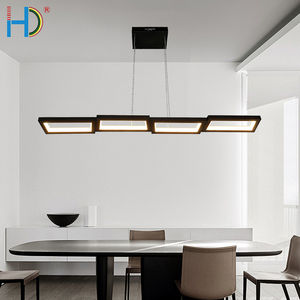
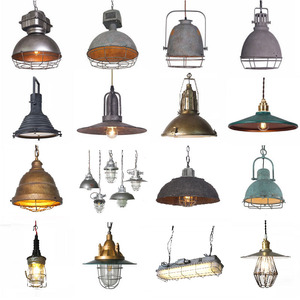
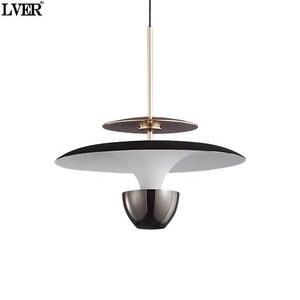
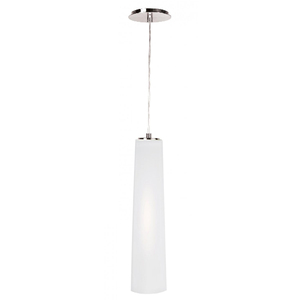
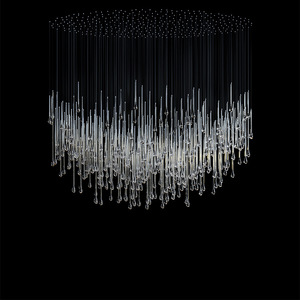
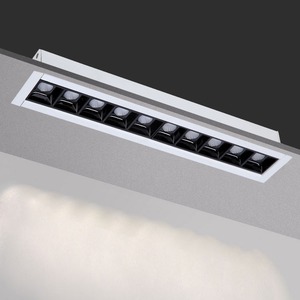
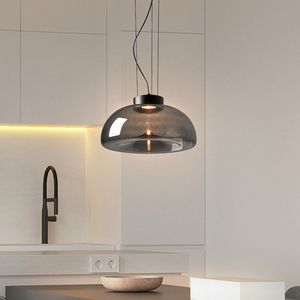
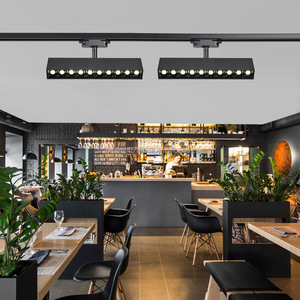
An authoritative guide for lighting specifiers, interior architects, MEP contractors, and procurement executives evaluating top-tier Chinese chandelier manufacturers.
"In modern hospitality and luxury commercial architecture, a crystal chandelier is no longer merely a decorative centerpiece; it is a complex optomechanical system requiring rigorous structural engineering, exact chromatic tolerance, and seamless protocol integration."
The brilliance of a luxury chandelier depends fundamentally on the light refractive index ($N_d$) and Abbe dispersion number ($V_d$) of its crystal elements. Premier Chinese manufacturers utilize advanced optical-grade K9 crystal glass and precision lead-free crystal with $N_d \ge 1.54$.
By employing diamond-wheel multi-faceted CNC cutting, prismatic angles are executed within tolerances under 0.05mm. This guarantees maximum internal light reflection, producing vivid chromatic dispersion ("fire") without visual haze or distortion.
Grand suspended chandeliers in double-height hotel lobbies or duplex villas demand strict structural integrity. Precision-cut T6063 architectural aluminum and solid H65 brass form the core framework of our luminaires.
Our surface finishing suite features over 30 bespoke metal treatments—including Physical Vapor Deposition (PVD), hand-applied anti-oxidant antique patinas, electroplated 24K gold, and satin nickel. High-humidity environments utilize multi-layer protective clear lacquers tested to 96-hour ASTM B117 salt spray standards.
Modern architectural crystal chandeliers integrate engineered LED light engines directly into their frame architecture. Utilizing high-CRI (Ra ≥ 95, R9 > 80) COB and SMD light sources, color consistency is held strictly within a 3-step MacAdam ellipse.
Drivers feature deep-dimming capabilities down to 0.1% via DALI-2, 0-10V, Phase, or Zigbee 3.0 protocols. Thermally optimized heat sinks ensure junction temperatures stay under 65°C, providing a rated system L70 lifespan exceeding 50,000 hours.
Understanding material grades is critical for technical submittals, value engineering, and long-term asset performance in high-traffic commercial spaces.
| Material / Spec Parameter | Optical Grade K9 Crystal | Lead-Free High-Index Crystal | Standard Pressed Glass |
|---|---|---|---|
| Refractive Index (Nd) | 1.517 – 1.540 (High Dispersion) | 1.560 – 1.585 (Extreme Fire) | 1.480 – 1.500 (Low Clarity) |
| Bubble & Inclusion Grade | Class A (Bubble-Free < 0.1mm) | Class V.V.S (Zero Bubbles) | Class C (Visible Pits & Striations) |
| Cutting & Polishing Method | Automated CNC Diamond Cut + Flame Polish | Computerized Micro-Facet Milling | Molded / Machine Polished |
| Structural Tensile Rigidity | High Thermal Stress Resistance | Ultra-High Optical Clarity | Moderate (Prone to Stress Fractures) |
| Primary Application | Hospitality Lobbies, High Ceiling Pendants | Luxury Custom Villa & Banquet Centerpieces | Standard Low-Budget Residential Fixtures |
How global architectural requirements, sustainability directives, and smart building technology are shaping China's chandelier manufacturing sector.
Procurement teams are transitioning from static color temperatures (such as standard 3000K) toward Tunable White systems (2200K to 5000K). Premium Chinese manufacturers are embedding dual-channel CCT mixing drivers and micro-refractor optics into crystal fixtures. This allows hotel lobbies and corporate ballrooms to shift smoothly from energizing daylight during daytime events to warm, relaxing tones during evening receptions.
In response to global carbon offset directives and LEED v4.1 certification goals, top Chinese OEM/ODM factories are redesigning crystal chandelier chassis around modular component architectures. Standardized driver housings, quick-disconnect wiring looms, and field-replaceable LED boards minimize lifetime operational waste and streamline on-site maintenance.
Uncontrolled glare from raw high-lumen crystal facets can cause visual fatigue in high-end commercial spaces. Next-generation designs combine micro-prismatic silicone diffusion lenses with secondary optical crystal droplets. This hybrid optical strategy maintains brilliant decorative shimmer while keeping unified glare ratings (UGR) below 19, meeting modern office and hospitality standards.
Modern commercial chandeliers are becoming active nodes in smart building control networks. Modern Chinese production lines incorporate Zigbee 3.0, Bluetooth Mesh, and DALI-2 drivers equipped with thermal sensors and lumen depreciation monitoring. Facilities management teams can now remotely track power usage, system temperature, and lamp lifespans in real time.
From initial design concept to final punch-list approval, our engineering workflow supports the technical submittals lighting designers and contractors rely on.
Every step of our process—including metal laser cutting, CNC turning, robotic welding, electroplating, crystal assembly, and final electrical testing—is executed under one roof. This integrated workflow allows us to convert complex design sketches into comprehensive submittal drawings within days.
We supply full submittal packages tailored for specifiers and MEP consultants. Every customized fixture comes complete with detailed CAD dimensioned shop drawings, 3D rendering views, IES photometric distribution files, thermal dissipation profiles, and structural load calculations for ceiling mounts.
Our luminaires are built to meet rigorous global standards. Whether requiring ADA-compliant wall sconce profiles for hotel corridors, damp-location sealing for spa retreats, or UL, CE, SAA, and RoHS certifications, our products are engineered for seamless code approval worldwide.
Work directly with our senior engineering team to develop custom crystal chandeliers, lobby suspension arrays, or specification-grade wall sconces for your upcoming hospitality or commercial projects.
Direct technical answers addressing structural engineering, finish selection, custom scaling, and international project logistics.
Yes. Because every luminaire is hand-assembled and engineered in our own manufacturing workshop, dimensions, overall drop lengths, mounting plate configurations, stem arrangements, and crystal layout counts can be re-engineered to match your project's architectural drawings. We routinely scale fixtures ranging from compact 24-inch dining pendants to multi-tiered 9-meter lobby chandeliers.
Specifiers can select from over 30 standardized metal finishes—including polished brass, brushed nickel, antique bronze, matte black, and PVD titanium gold. We also offer solid hardwood accents, hand-blown fluted glass, real alabaster, and hand-sewn flame-retardant linen or silk shade options. Physical finish samples and cut plates are available upon request for design review packages.
All our commercial luminaires are engineered to meet specification-grade building requirements. This includes ADA-compliant low-profile wall sconce designs for public corridors, IP65 damp-location seals for high-humidity areas, seismic-rated suspension cables, and certified integrated LED or lamped sockets compatible with 0-10V, DALI, and Phase dimming controls.
To begin a custom project, submit your design drawings, elevations, rendered concepts, or reference imagery directly to our technical sales engineering team. Within 48 to 72 hours, our engineers will return a complete shop drawing proposal detailing structural dimensions, material callouts, estimated weights, electrical specs, and photometric projections before fabrication begins.
Every crystal element undergoes a rigorous multi-stage quality control inspection. Optical prisms are checked for color uniformity, facet cut precision, micro-fractures, and inclusions under high-intensity optical analyzers. Individual crystal strands are then hand-assembled using anti-corrosion stainless steel or brass pins and protective-packaged in custom die-cut high-density EVA foam to prevent damage during international transport.
Standard engineering submittal drawing packages require 3 to 5 business days. Once shop drawings and finish samples are formally approved, sample fabrication takes approximately 2 to 3 weeks. Full production runs for hospitality projects typically range from 30 to 45 calendar days, depending on fixture complexity and overall order volume. Expedited production tracks are available for urgent project schedules.