Hotel lighting is entering a more demanding era. In 2026, guests will expect lower energy use, stronger visual comfort, and memorable spaces. Hospitality Lighting Solutions must support all three without making the hotel feel overly technical.
The International Energy Agency reports that buildings consume about 30% of global final energy. Its 2024 Buildings report also links buildings to roughly 26% of energy-related emissions. Lighting remains a practical improvement area. The U.S. Department of Energy states that LED products can use at least 75% less energy than incandescent lighting. However, replacing every lamp with an LED is not enough. Poor color quality, glare, and weak controls can damage the guest experience.
Sally Storey, lighting designer and author, has said, “Lighting is the jewelry of architecture.” Her observation remains useful for hotels in 2026. A warm bedside lamp, a shadow-free bathroom mirror, and subtle corridor lighting can shape comfort before guests notice the fixtures. Research from Deloitte’s 2025 Travel Industry Outlook also highlights continued pressure on hospitality businesses to improve efficiency and guest value. The challenge is balancing investment with atmosphere. That balance is imperfect. A brighter lobby may still feel cold. Automated controls may also frustrate staff when settings are poorly calibrated. The strongest Hospitality Lighting Solutions combine measured energy performance, practical maintenance, and human observation. For hotel owners, designers, and operators, the question is no longer simply how to illuminate a room. It is how light can make the entire stay feel considered.
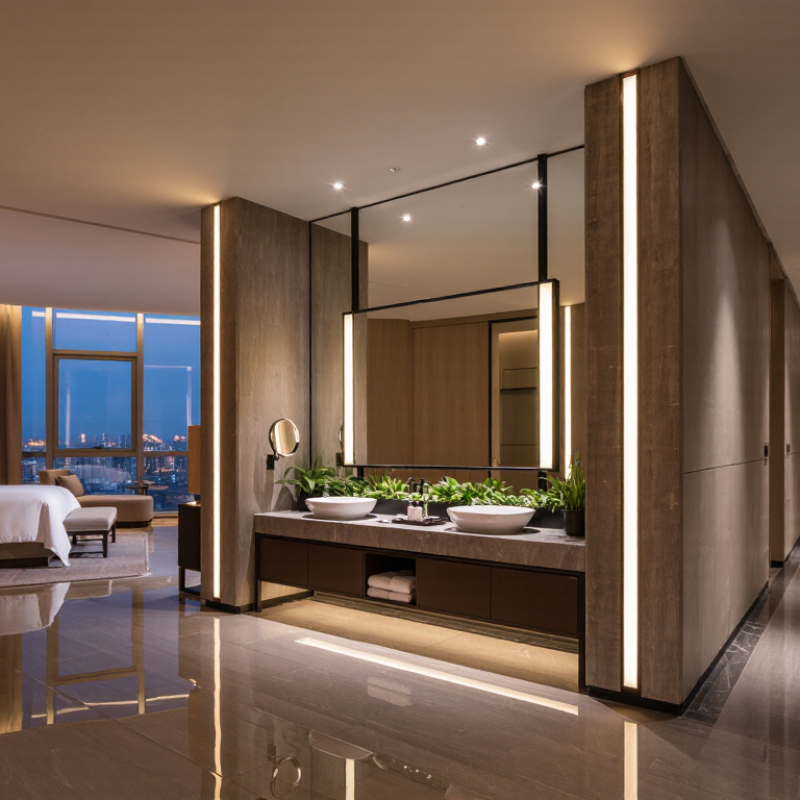
Hotel lighting begins with comfort, safety, and visual hierarchy. Lobby light should guide movement without creating glare on polished floors. Guestroom lighting needs separate layers for reading, dressing, and relaxation. Guests notice glare. They also notice dark mirrors.
The U.S. Department of Energy reports that LED lighting can use at least 75% less energy than incandescent lighting and last up to 25 times longer. This supports rapid LED adoption across hotels, but efficiency alone is not enough. Poor color rendering can make food, fabrics, and skin tones look unnatural. Lighting designers should check color rendering, flicker, glare, and maintenance access during mock-room testing.
In 2026, hotels are expected to expand networked controls, occupancy sensors, and tunable white systems. These tools can reduce wasted energy and adjust light throughout the day. The International Energy Agency identifies lighting as responsible for roughly 15% of global electricity use, making control strategies commercially important. ENERGY STAR also reports that certified LED products typically use 70–90% less energy than incandescent lighting.
A perfect lighting recipe does not exist. Some automated systems feel cold or react too slowly. Hotel teams should review guest feedback, energy data, and nighttime observations after installation. Small corrections matter: dimming a corridor by 10%, shielding a bedside lamp, or warming evening light can improve comfort without rebuilding the property.
Guest-room lighting should feel calm, flexible, and quietly intuitive. In 2026, layered lighting remains more useful than one bright ceiling fixture. Combine warm ambient light, focused reading light, soft bedside illumination, and discreet wardrobe lighting. A 2700K–3000K color temperature can create a residential mood. High color rendering, ideally CRI 90 or above, helps skin tones and fabrics appear natural. Bathrooms need vertical light at the mirror. Ceiling downlights alone often create unflattering shadows.
Energy performance is equally important. The International Energy Agency’s Buildings 2023 report states that buildings produce about 26% of global energy-related emissions. Efficient guest-room lighting can support a hotel’s wider reduction strategy. The U.S. Department of Energy reports that LED lighting uses at least 75% less energy and lasts up to 25 times longer than incandescent lighting. Dimming, vacancy sensors, and room-management controls can reduce unnecessary operation. However, sensors sometimes frustrate guests when they respond too quickly. Comfort must lead technology.
Tips: Place bedside controls within easy reach, even from a resting position. Add separate controls for reading and ambient scenes. Use low-level night lighting near the bathroom, not bright overhead light. Test every scene from the bed, desk, luggage bench, and doorway. A perfect lighting plan is unrealistic. Guest habits vary, and designers can miss small moments. Mock-up rooms and post-occupancy feedback remain essential.
Hotel lighting in 2026 must do more than make public spaces visible. It should guide movement, support comfort, and express the property’s character. In lobbies, layered lighting works best. Combine soft ceiling light, decorative pendants, and focused illumination near reception desks. Keep the welcome area bright enough for clear facial recognition. Avoid harsh glare on polished floors.
Corridors need consistent, low-glare illumination. Guests should easily read room numbers without searching for shadows. Wall washers can add depth, while discreet floor-level lights improve nighttime orientation. A warm color temperature often creates a calmer atmosphere. However, excessive warmth can make corridors appear dull or poorly maintained. This balance requires on-site testing, not only drawings.
Public areas need flexible control. Meeting rooms, lounges, and restaurants may share one architectural zone, but their lighting needs differ. Dimming systems can support cleaning, daytime activity, and evening relaxation. Occupancy sensors may reduce wasted energy in quiet corridors. Still, sensors sometimes react too slowly or switch off during guest movement. That flaw deserves attention before installation. In my experience, the best results come from mock-ups, measured brightness, and feedback from housekeeping staff. Their practical observations often reveal problems designers miss. Good hospitality lighting feels natural, reliable, and quietly intentional.
Hotel lighting in 2026 must do more than create a welcoming mood. It should reduce energy use, support guests, and remain practical for staff.
In projects I have reviewed, occupancy sensors worked well in corridors and storage areas. Guestrooms needed more careful settings. A sensor that switches off too quickly can frustrate a tired traveler.
Energy-efficient LED fixtures remain essential, but efficiency depends on the complete system.
Warm, dimmable light can make bedrooms feel calmer, while brighter task lighting helps guests read menus or work.
Daylight sensors should adjust lobby lighting near large windows.
This prevents unnecessary output during bright afternoons. Small details matter.
Smart controls can connect guestrooms, meeting rooms, and public spaces through one monitoring platform.
Facility teams can check unusual energy patterns and schedule maintenance before failures become visible. Wireless controls may simplify renovations, although signal reliability requires testing. I have seen attractive systems underperform because staff received little training. Technology alone is not sustainability.
Sustainable design also considers repair, material selection, and operating life.
Choose durable housings, replaceable components, and recyclable packaging where possible. Avoid excessive decorative lighting that adds heat and maintenance demands.
The best plan balances atmosphere with measurable performance. That balance is not always perfect. Hotel owners should review energy data, guest feedback, and maintenance records after installation, then adjust scenes carefully.
Selecting a hotel lighting system should begin with guest behavior, not fixture catalogs. The International Energy Agency reports that lighting uses about 15% of global electricity. Efficiency matters, but comfort remains essential. A lobby needs calm brightness, while corridors need safe, even visibility. Guestrooms benefit from layered lighting: ceiling illumination, reading lights, bedside controls, and soft bathroom lighting.
Choose LED equipment with high color rendering, stable dimming, and replaceable components. A color rendering index above 90 can reveal food, fabrics, and skin tones more naturally. Warm-white settings near 2700–3000K usually support evening comfort. Cooler light may suit gyms and service areas. The U.S. Department of Energy notes that quality LEDs can use at least 75% less energy than incandescent lamps and last much longer.
Implementation needs a room-by-room control plan. Occupancy sensors can reduce wasted corridor energy, while daylight sensors can adjust lights near windows. Commission each scene after installation. A bedside switch that requires three attempts will frustrate tired guests. It happens more often than design teams expect. Poorly placed sensors can also leave bathrooms dark after a few quiet seconds. Test at midnight, not only during a daytime inspection. The Illuminating Engineering Society recommends evaluating visual comfort, glare, and maintained illuminance, yet many projects still measure brightness without asking guests how the space feels. That gap deserves attention.
Use layered lighting with soft ceilings, decorative pendants, and focused reception illumination. Keep faces clearly visible. Avoid glare on polished floors.
Corridors need even, low-glare light. Guests should read room numbers without searching through shadows. Wall washers and subtle floor lights improve orientation.
Warm light can create a calmer atmosphere. Too much warmth may make corridors look dull or poorly maintained. Test the color temperature on site.
Meeting rooms, lounges, and restaurants need different brightness levels. Dimming supports cleaning, daytime activity, and evening relaxation.
Yes, especially in quiet corridors and storage areas. However, slow sensors may turn lights off while guests are still moving. That flaw needs testing.
They reduce lighting output near large windows during bright afternoons. This avoids unnecessary energy use. Small adjustments matter.
Test wireless signal reliability and provide practical staff training. Attractive systems can still underperform. Technology alone is not sustainability.
Select durable housings, replaceable components, and recyclable packaging. Consider repair and operating life. Decorative lighting should not create needless heat or maintenance.
Review energy data, guest comments, and maintenance records. Housekeeping staff may notice dark corners or sensor problems first. Adjust scenes carefully. Perfect results are unlikely.
In 2026, hotel lighting is evolving beyond basic illumination to support comfort, identity, wellness, and operational efficiency. This overview explains the fundamentals of hospitality lighting, including layered illumination, color temperature, glare control, and visual consistency. It explores practical solutions for guest rooms and suites, such as ambient, task, reading, and accent lighting, while also addressing the distinct needs of lobbies, corridors, restaurants, meeting spaces, and other public areas. Thoughtful lighting design can create welcoming experiences, improve navigation, and reinforce the atmosphere of each space.
The article also examines energy-efficient fixtures, daylight integration, occupancy sensors, dimming systems, and smart controls that help reduce consumption and simplify management. Sustainable materials, long service life, and adaptable layouts are considered important factors in responsible hotel design. Finally, it outlines how to select and implement Hospitality Lighting Solutions by evaluating project goals, architectural conditions, guest expectations, maintenance requirements, budget, and future flexibility. A coordinated approach ensures that the lighting system is attractive, functional, efficient, and suitable for long-term hotel operations.