Custom Linen Flush Mounts are gaining attention among global buyers who want soft, low-profile lighting without sacrificing character. Their fabric shades diffuse light across ceilings and walls, while compact forms suit bedrooms, hallways, dining nooks, and rooms with limited clearance. The details matter: a tightly woven ivory linen can soften glare, while a darker flax tone may cast a warmer, more textured glow. Small differences show.
The market context favors considered fixture choices. The International Energy Agency’s Buildings report notes that buildings account for about 30% of global final energy consumption. That figure covers far more than lighting, but it underscores why buyers compare fixture design, lamp compatibility, and operating needs together. The U.S. Department of Energy reports that residential LED lighting uses at least 75% less energy than incandescent lighting. For linen shades, an efficient compatible LED can reduce heat exposure compared with older lamp types, though buyers should always check the fixture’s specifications.
This guide explores leading 2026 types, including classic drum, square, tapered, and layered linen flush mounts. It also considers frame finishes, shade proportions, light output, and customization options for different interiors and markets. A product photograph is not enough. Fabric samples, ceiling height, and the room’s existing colors can change the result. Even a well-made fixture may feel too bulky in a narrow corridor. That is worth admitting.
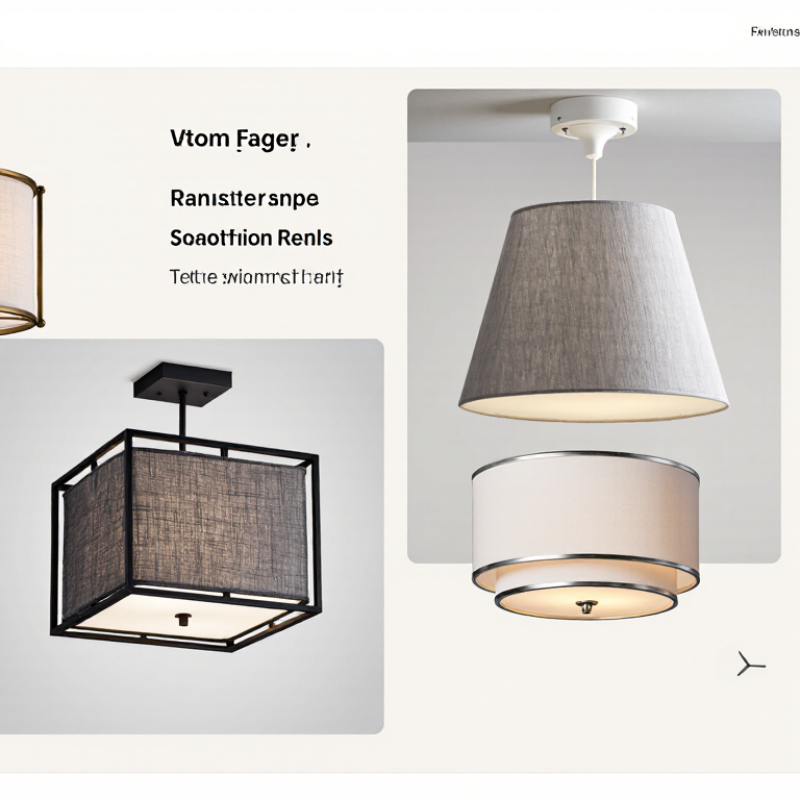
A custom linen flush mount is a ceiling light designed to sit close to the ceiling, with its shade and proportions tailored to a specific room or project. “Custom” can mean more than choosing a fabric color. Buyers may specify the fixture’s diameter, overall height, linen weave, shade shape, frame finish, and diffuser. Each choice affects how the light looks and spreads.
The weave makes a visible difference. A tighter linen can soften glare while keeping the shade’s outline crisp; a looser weave may reveal more of the light source. Ask for fabric samples under warm and cool light, since a swatch beside a window can look unlike one installed overhead. That detail matters. Also confirm the fixture’s dimensions against ceiling height, nearby cabinetry, and the room’s scale. A shade that looks generous in a drawing can feel heavy in a compact hallway.
Reliable specifications should identify the light source, mounting method, and materials suitable for the fixture’s operating conditions. Linen should be used as part of a properly designed shade, not placed against components that become too hot. Request drawings, finish samples, and clear installation requirements before approving production. A custom order still involves trade-offs; a beautiful texture may reduce light output more than expected. That is easy to miss.
| Type | Typical Form | Linen and Shade Construction | Light Distribution | Common Applications | Potential Customizations | Buyer Considerations |
|---|---|---|---|---|---|---|
| Drum Linen Flush Mount | Round, shallow drum positioned close to the ceiling | Linen is stretched over a circular frame; an optional diffuser can cover the bottom opening. | Broad, generally even light; a bottom diffuser softens direct views of the light source. | Bedrooms, living areas, hallways, and other rooms with standard or lower ceilings | Diameter, shade height, fabric color and weave, frame finish, diffuser, and lamp configuration | Check the overall diameter and projection from the ceiling. Confirm how the shade and diffuser are cleaned or replaced. |
| Square or Rectangular Linen Flush Mount | Low-profile geometric shade with a square or rectangular footprint | Fabric panels cover a geometric frame, often with a translucent diffuser beneath the light sources. | Mostly downward and ambient light, depending on the diffuser and shade design | Modern interiors, corridors, home offices, and rooms where a linear shape suits the layout | Plan dimensions, corner details, fabric panel layout, diffuser type, and ceiling plate finish | Confirm the fixture's orientation and dimensions against the ceiling box and available ceiling space. |
| Shallow Dome Linen Flush Mount | Rounded, gently curved shade with a compact ceiling profile | Linen is fitted over a curved frame; construction may include a lower diffuser to conceal lamps. | Soft downward light with some illumination diffused through the shade | Bedrooms, entryways, and compact rooms where a rounded silhouette is preferred | Dome depth, diameter, fabric texture, trim, diffuser, and light-source arrangement | Ask for the full height, including the canopy and shade, rather than relying on a product photo. |
| Layered or Double-Drum Linen Flush Mount | Two shade layers or a linen outer shade paired with an inner diffuser | An outer textile layer is combined with a secondary lining, diffuser, or inner shade. | More controlled and softened output; the exact effect depends on the lining and diffuser opacity. | Living rooms, bedrooms, and hospitality interiors seeking a more layered appearance | Inner and outer fabric colors, layer spacing, diffuser material, shade proportions, and trim | More layers can affect light output and cleaning access. Request details about lamp replacement and shade maintenance. |
| Trimmed-Edge Linen Flush Mount | Simple drum or shallow shade finished with a visible border or contrasting edge | Linen panels are accented with a separate fabric band, piping, or other specified trim. | Similar to the underlying shade shape; trim is primarily a decorative detail. | Bedrooms, dining areas, and coordinated interior schemes | Trim width, color contrast, edge placement, shade dimensions, and metal finish | Confirm that trim materials and colors are specified consistently across samples and production. |
| Printed or Textured Linen Flush Mount | Usually a drum or shallow profile with a patterned or visibly textured shade | Uses a selected linen or linen-blend appearance; surface pattern and weave affect how light passes through. | Varies with fabric density, color, lining, and diffuser; darker or denser materials may transmit less light. | Accent spaces, bedrooms, and interiors where the ceiling fixture is a visual feature | Pattern scale, fabric color, weave, lining, shade shape, and diffuser configuration | Review a material sample under illuminated conditions, since fabric appearance can change when backlit. |
| Custom-Size Linen Flush Mount | A made-to-order shade sized for a particular ceiling or room | Construction follows the selected profile and fabric, with dimensions set for the project. | Depends on shade geometry, lamp placement, diffuser, and chosen light source. | Residential projects, renovations, and contract interiors with specific size requirements | Diameter or length, shade height, total fixture projection, fabric, diffuser, and mounting details | Request a dimensioned drawing and verify ceiling-box position, available clearance, voltage, and local installation requirements. |
What defines a custom linen flush mount? It is a close-to-ceiling light fixture whose shade uses linen or a linen-blend textile and is specified to order in one or more details, such as dimensions, fabric, lining, diffuser, trim, finish, or mounting arrangement. Confirm that the complete fixture is suitable for the intended location and that its electrical rating and installation comply with local requirements. Use only light sources and wattages permitted by the fixture instructions; a damp or wet location rating should be verified rather than assumed.
A 10- to 14-inch fixture can work in a compact hallway. Measure the canopy, door clearance, and nearby cabinets before approving a design. A few centimeters matter.
Round shades can soften narrow rooms. Square or rectangular shades may align better with beams and long corridors. The room’s proportions should guide the choice.
Loose weaves let more light pass through. Tighter weaves can reduce glare but may dim the room. Check a swatch under the intended bulbs; daylight can change its appearance.
Compare integrated LEDs with replaceable lamps, dimming options, and warm-to-neutral color temperatures. Confirm driver compatibility, wattage, lumen output, and dimmer specifications before production.
No. General LED figures do not verify the fabric, driver, or assembly. Ask for specifications and a test report matching the exact fixture.
Look for uneven seams, loose fibers near the socket, and fabric sagging against the frame. Inspect it under bright light. Small flaws can be easy to miss.
Request electrical safety documents for the destination market, including applicable testing requirements. Check that labels match the product and voltage. A similar-looking certificate may not be enough.
Verify accepted marks and document requirements with the importer or local authority. Ask how heat resistance was assessed on the finished fixture. I would not assume a neat certificate answers everything.
Confirm access for future repairs and ask about replacement parts. Check packaging protection, since frames can arrive crushed. It is worth asking twice.
Custom Linen Flush Mounts combine a low-profile ceiling design with the soft texture of fabric, offering a practical option for rooms where a pendant or chandelier may not suit the space. Their construction typically brings together a ceiling mount, frame, linen shade, and lighting components. Buyers can explore styles such as drum, square, oval, and tiered designs, with choices in dimensions, silhouette, linen color and weave, diffuser, and light source. These options make it possible to coordinate the fixture with a room’s scale, decor, and desired light quality.
When comparing options, global buyers should look beyond appearance and review the frame’s stability, fabric workmanship, shade alignment, finish quality, and ease of installation and maintenance. They should also check that electrical components and product documentation are appropriate for the intended market, including relevant safety testing and compliance requirements. Clear specifications, consistent production standards, and careful packaging can help buyers select a flush mount that performs reliably and fits their project.