0%

China’s custom lighting market has become a practical source for hotels, retail spaces, museums, offices, and residential projects. Yet choosing a supplier requires more than comparing glossy product images. Custom Architectural Lighting must respond to the building’s materials, ceiling depth, viewing angles, maintenance plan, and local electrical requirements.

James Turrell, a leading light artist and architectural lighting authority, said, “Light is not so much something that reveals, as it is itself the revelation.” His words remain useful when evaluating Chinese manufacturers. A recessed linear fixture should disappear into a ceiling, while a wall washer should create an even vertical glow without harsh hotspots. Details matter.

This guide examines China’s top Custom Architectural Lighting suppliers through practical criteria. These include design capability, optical performance, production experience, customization range, quality control, and project support. We will consider beam angles, CRI, color consistency, dimming systems, heat management, IP ratings, and photometric documentation. Factory visits, sample testing, installation feedback, and independent certification records can reveal more than a sales presentation.

No supplier is perfect. A strong manufacturer may offer excellent optics but limited after-sales support. Another may provide fast prototypes but weaker documentation. This is where careful comparison becomes essential. Ask for real project references. Review mock-ups under actual finishes. Check whether promised lead times survive design changes.

The best partners do not merely manufacture attractive fixtures. They help translate an architect’s intention into dependable light, from a quiet hotel corridor to a dramatic museum ceiling. Small mistakes remain possible, and they should be discussed openly. Reliability grows through evidence, communication, and repeated testing.
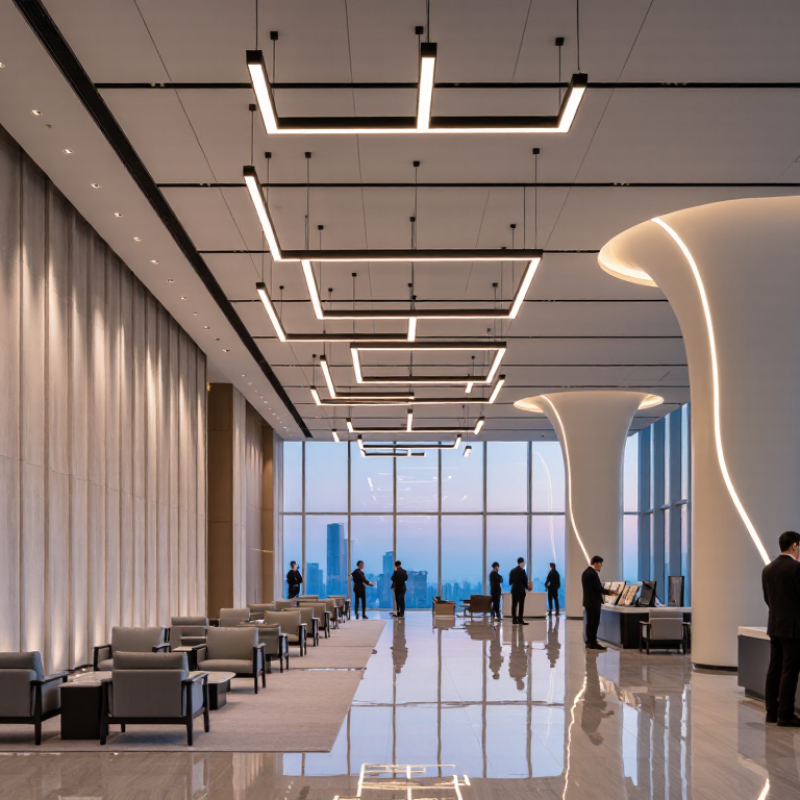
China Top Custom Architectural Lighting Suppliers

China’s Custom Architectural Lighting Market: 2024 Industry Data and Segments

China’s Custom Architectural Lighting Market: 2024 Industry Data and Segments

China’s custom architectural lighting market expanded in 2024, supported by hotels, offices, retail spaces, and cultural buildings. Public data remains fragmented. Estimates vary because suppliers classify custom work differently. Project-based industry reviews suggest commercial projects formed the largest segment, near 35% to 40% of demand. Hospitality followed, at roughly 20% to 25%. Public buildings, high-end housing, and landscape projects filled most remaining orders.

Details matter here. A hotel may require warm, dimmable lighting for guest rooms, while a museum needs controlled glare and accurate color rendering. Offices often prioritize energy monitoring, modular replacement, and lighting controls. Leading Chinese suppliers usually provide optical design, photometric files, prototypes, and small-batch production. Stronger factories also manage aluminum finishing, driver matching, thermal testing, and installation guidance. Ask for test reports, not only polished samples.

The market is becoming more specification-driven. Buyers increasingly request lower energy use, recyclable materials, and compatibility with smart building systems. However, customization still creates risks. A visually attractive prototype may produce uneven brightness after mass production. Delivery promises can also hide tooling delays. Independent sample approval and clear tolerance limits are practical safeguards. Some industry estimates may overstate growth because they combine decorative fixtures with genuinely engineered architectural systems. That distinction needs closer review in future 2024 market reporting.

China’s Custom Architectural Lighting Market: 2024 Industry Data and Segments

Estimated 2024 share of custom architectural lighting project value in China by application segment. Commercial projects represent the largest demand category, followed by residential and hospitality developments.

The segment percentages represent market-structure estimates for custom architectural lighting projects and exclude standardized mass-market lamps, bulbs, and replacement products.

Supplier Discovery: OEM/ODM Capacity, MOQ, Lead Times, and Export Data

Choosing China’s top custom architectural lighting suppliers requires more than comparing catalog photos. Start with OEM and ODM evidence. Ask for factory layouts, engineering drawings, LED specifications, and recent project samples. A capable OEM team should adjust dimensions, finishes, drivers, and mounting systems without losing production control. ODM suppliers should explain what is genuinely customizable.

MOQ deserves careful attention. Some workshops accept small prototype orders, while mass production may require 100 or more units. Request separate pricing for samples, pilot batches, and repeat orders. Confirm whether tooling fees, color testing, and packaging changes are included. Small details often affect the final budget.

Lead times should be divided into design approval, sampling, production, and inspection. For example, a custom pendant may need two weeks for drawings, three weeks for sampling, and six weeks for production. These figures are estimates, not promises. Export data can reveal more. Check shipment frequency, destination markets, product descriptions, and HS-code consistency through reliable trade databases. A supplier with regular exports may understand documentation better, but shipment volume alone proves little. A spreadsheet is useful, but it can still lie by omission. Request references, verify test reports, and arrange independent pre-shipment inspection. Factories sometimes overstate capacity during busy seasons. That risk deserves a written contingency plan.

Photometric Benchmarks: 80–200 lm/W, CRI ≥90, and TM-30 Reporting

China Top Custom Architectural Lighting Suppliers

Photometric benchmarks help project teams compare custom architectural lighting beyond appearance. A practical target is 80–200 lm/W, but efficiency changes with beam angle, housing size, dimming, and color temperature. Ask suppliers to state whether the figure includes the driver. Fixture-level results are more useful than LED-chip data.

80–200 lm/W A practical target for custom architectural lighting

Color quality should reach CRI 90 or higher, especially in galleries, hotels, retail spaces, and premium residences. CRI alone can hide weak red performance. Request R9 values and a TM-30 report showing Rf and Rg. Rf indicates fidelity, while Rg reveals shifts in color saturation.

A credible report should identify test conditions, operating temperature, electrical input, and laboratory equipment. I have seen attractive samples perform differently after thermal testing. That gap deserves attention.

Tips:

Request IES or LDT files, not only product photographs. Compare results at the actual drive current and ambient temperature. Check whether optics, trim, and dimming controls were included. Photometric data can still be incomplete. Independent verification is wise for large projects, although it adds time and cost. Suppliers with strong technical experience should explain measurement limits clearly, provide revised files when specifications change, and support a sample installation before production. A small mock-up may expose glare, uneven walls, or disappointing skin tones that a spreadsheet cannot show.

Compliance Verification: IEC 60598, CE, RoHS, IP65, and IK08 Ratings

China Top Custom Architectural Lighting Suppliers

For custom architectural lighting, compliance verification should begin before production. Suppliers should identify the relevant IEC 60598 requirements for each luminaire design. These requirements address electrical safety, insulation, heat, wiring, and mechanical construction. Ask for current test reports, technical drawings, and production samples. Do not rely on a printed certificate alone.

CE marking shows conformity with applicable European requirements. It is generally supported by a manufacturer’s Declaration of Conformity and technical documentation. RoHS evidence should explain restricted substance controls in components, solder, cables, and surface finishes. During project reviews, I would compare these records with the actual sample. Labels can be misleading.

IP65 means the enclosure is dust-tight and protected against water jets. IK08 indicates resistance to a 5-joule impact. These ratings depend on the complete assembled product, not only the housing. Check gaskets, cable entries, lenses, and mounting joints. A small gap can undermine an otherwise strong design. Request test conditions, sample photographs, and report numbers. Factory quality checks should repeat critical tests during production. Independent laboratory verification is preferable for high-value installations. Documents may still contain errors, so technical teams should question inconsistent model numbers, dates, and ratings.

Project Selection: 50,000-Hour L70, LM-79 Tests, Warranty, and DALI-2

China Top Custom Architectural Lighting Suppliers

Project Selection: 50,000-Hour L70, LM-79 Tests, Warranty, and DALI-2

Selecting a custom architectural lighting supplier requires more than reviewing attractive product photos. For a 50,000-hour L70 specification, confirm the tested lumen-maintenance data, operating temperature, and projected usage conditions. L70 describes when output falls to 70 percent, not when the fixture stops working. Ask for test methods, sample details, and a clear explanation of assumptions. Vague numbers deserve caution.

LM-79 reports should include measured lumens, wattage, efficacy, color temperature, color rendering, and electrical results. Request reports from recognized independent laboratories when possible. During a recent project review, a supplier provided excellent photometry but incomplete thermal information. That gap changed the final selection. Good documentation is useful; complete documentation is safer.

Tips: Read the warranty line by line. Check coverage periods, labor responsibility, replacement procedures, and exclusions for coastal or high-temperature sites. For DALI-2 projects, verify device compatibility, control gear details, commissioning support, and relevant certification evidence. Ask for a sample before approving production. Touch the housing after extended operation. It may reveal what a spreadsheet misses. Also confirm LED binning, driver availability, spare parts, and quality-control records. A lower price can look efficient, but weak after-sales support may cost more over time. Be willing to revise the specification when test evidence is incomplete. That is not hesitation. It is professional judgment.

FAQS

How can buyers verify a supplier’s OEM or ODM capability?

Request factory layouts, engineering drawings, LED specifications, and recent project samples. A capable team should adjust dimensions, finishes, drivers, and mounting systems. Ask what is truly customizable. Catalog photos prove little.

What MOQ details should buyers confirm?

Request separate prices for samples, pilot batches, and repeat orders. Confirm whether tooling, color testing, and packaging changes are included. Some workshops accept small prototypes. Mass production may require 100 units or more.

How should custom lighting lead times be evaluated?

Divide the schedule into design approval, sampling, production, and inspection. One example includes two weeks for drawings, three weeks for sampling, and six weeks for production. These are estimates, not promises. Add a written contingency plan.

Can export data prove that a supplier is reliable?

Check shipment frequency, destination markets, product descriptions, and HS-code consistency. Regular exports may indicate stronger documentation experience. Shipment volume alone proves little. A spreadsheet can still mislead.

Which photometric data should buyers request?

Request fixture-level results, IES or LDT files, and test conditions. Check whether the driver, optics, trim, and dimming controls were included. Compare data at the actual drive current and ambient temperature. Photos are not enough.

What color-quality information matters for architectural lighting?

Target CRI 90 or higher for galleries, hotels, retail spaces, and premium residences. Also request R9 values and a TM-30 report. Rf shows color fidelity, while Rg shows saturation shifts. Skin tones may still disappoint.

How should a 50,000-hour L70 claim be checked?

Ask for lumen-maintenance data, operating temperature, test methods, and sample details. L70 means output reaches 70 percent of the original level. It does not mean the fixture stops working. Vague assumptions deserve caution.

What should buyers inspect before approving production?

Review LM-79 reports, warranty exclusions, driver availability, spare parts, and quality-control records. For DALI-2 projects, confirm device compatibility and commissioning support. Arrange an independent pre-shipment inspection when practical. A small mock-up may reveal glare or uneven walls. I would not approve incomplete evidence.

Conclusion

China’s Custom Architectural Lighting market offers a broad range of OEM and ODM solutions for commercial, hospitality, residential, and public projects. This guide explains how to evaluate suppliers by reviewing production capacity, minimum order quantities, lead times, export experience, and customization services. It also highlights key performance benchmarks, including 80–200 lm/W efficiency, CRI of 90 or higher, and TM-30 reporting for more accurate color evaluation.

For reliable project selection, buyers should verify compliance with IEC 60598, CE, RoHS, IP65, and IK08 requirements, while requesting supporting test documentation such as LM-79 reports. Long-term value also depends on a verified 50,000-hour L70 rating, clear warranty terms, dependable quality control, and compatibility with DALI-2 lighting systems. By comparing technical data, certifications, and service capabilities, project owners can select Custom Architectural Lighting solutions that balance design flexibility, durability, energy performance, and installation requirements.


Ethan

Ethan

Ethan is a professional marketing specialist dedicated to helping businesses understand and benefit from innovative technology solutions. With a strong knowledge of the company’s products, services, and industry applications, he transforms complex information into clear, practical, and engaging......